
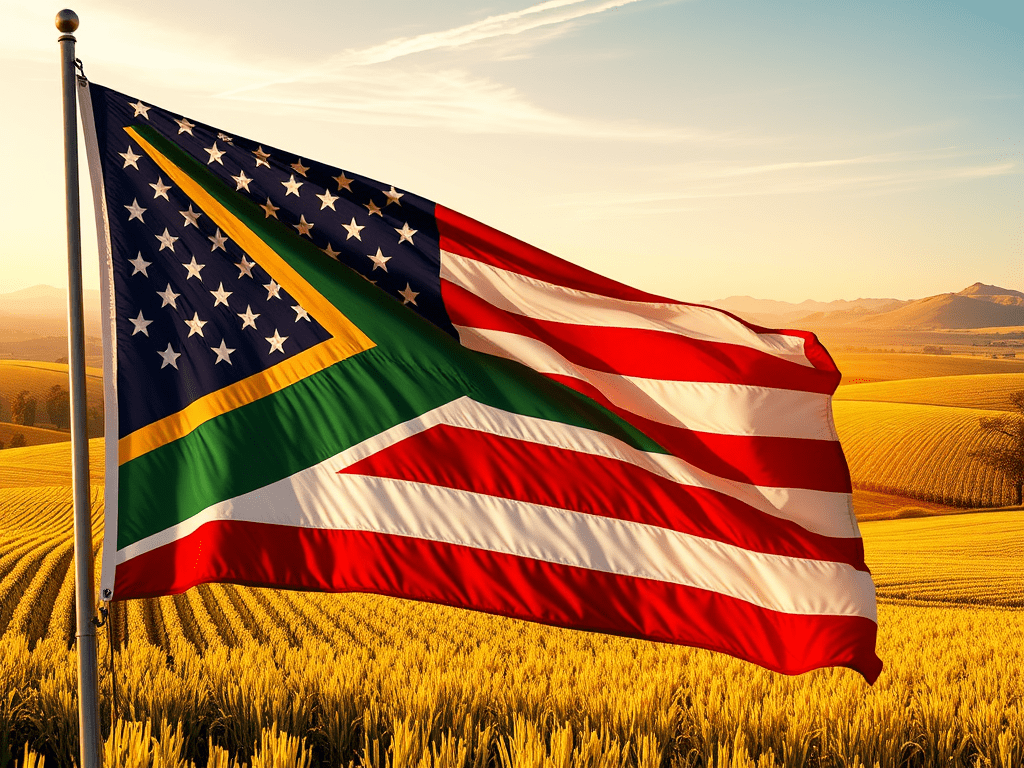
It isn’t about land reform – it’s about race.
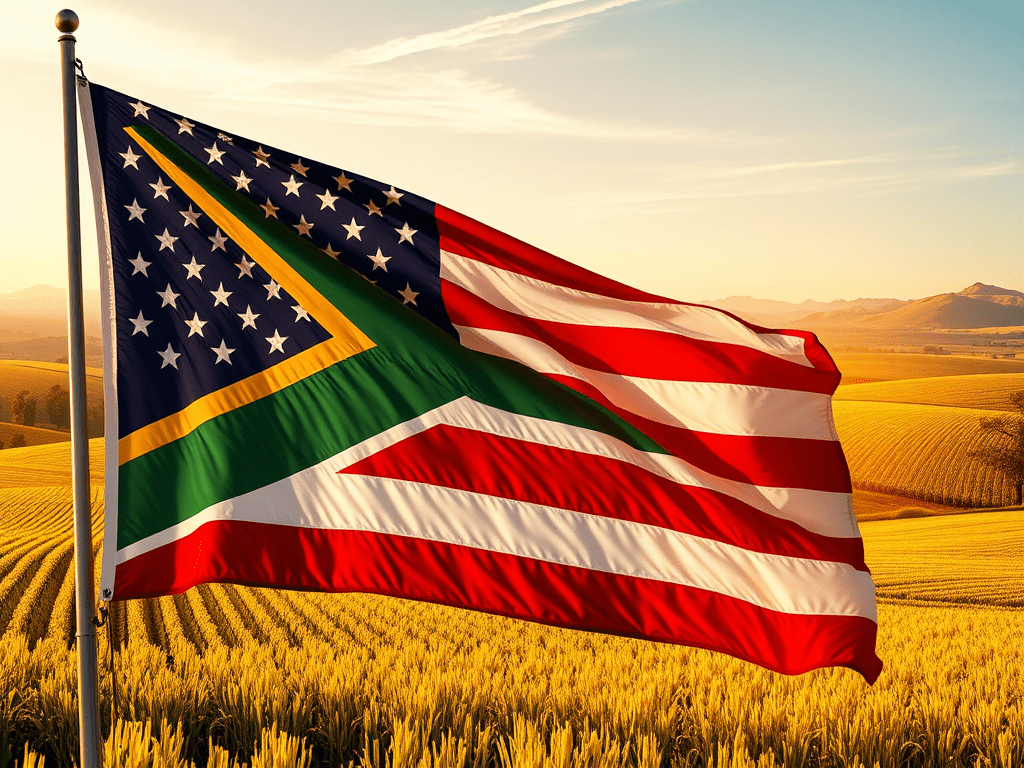
South Africa is back in the news, and I want to offer some context. While you should ideally hear this from a South African or an expert in South African politics, I’ll try to put my International Relations degree and my experience living in Southern Africa to good use.
South Africa is making headlines because the U.S. is attempting to influence its domestic politics. To understand why, you should understand the country’s colonial history and economic structure, and how that relates to the oligarch dictating U.S. foreign policy.
South Africa and the U.S. have a lot in common, particularly when it comes to the American South. We were both British colonies, and we both maintained legal systems of white supremacy for decades—Jim Crow in the U.S. and apartheid in South Africa. Let’s take a deeper look at the role colonization had in creating those systems.
The Usual Suspect
European powers used advanced weaponry and naval dominance to subjugate thriving cultures, destroying languages, traditions, and economies. Colonization generally took one of two forms: extractive or settler-based. Most of Africa was subjected to extractive colonization. In places like Kenya or Senegal, Europeans died quickly from tropical diseases, so they didn’t settle in large numbers. Instead, they extracted resources by exploiting local leaders and dividing existing power structures. When they left, they left behind weak governments—few schools, hospitals, roads, or institutions.
Take the Congo, for example. When it gained independence in 1960, fewer than 20 people in the whole country had college degrees. Imagine trying to build a government from scratch, with ministries of health, education, defense, infrastructure, etc. with so few trained professionals. The fact that many African nations have only had my parents’ lifetime to “catch up” to Western powers puts today’s global inequalities in perspective. (To say nothing of CIA interference…)

South Africa, however, developed differently as a colony. Unlike the rest of Africa, it was hospitable to European settlers. Fewer endemic diseases meant Europeans could build institutions and establish a long-term presence. They built schools, courts, roads, and hospitals—systems that helped it thrive. Similar patterns occurred in the U.S., Canada, Australia, and New Zealand, where temperate climates encouraged colonizers to build settler societies instead of purely extractive ones. So while extractive colonies like the Congo were set up for failure post-independence, settler-based colonies like South Africa were set up for success.
Independence for Thee, Status Quo for Me
Typically, after independence, native populations regained control of their lands. But in South Africa, the white colonizers never left. The Afrikaners had been thriving there thanks to thriving institutions, social support systems, and infrastructure networks. Afrikaners weren’t about to give up the system that kept them wealthy. Post-independence, white South Africans entrenched their dominance with a formal system of racial segregation—apartheid.

Just as U.S. independence meant little for Black Americans until Jim Crow laws were abolished, South Africa’s nominal independence didn’t mean freedom for Black South Africans. They were “free” but could not access the same jobs, education, healthcare—or, crucially, land. Apartheid forced the native population off their land, off their farms, off their ancestral grazing grounds – off their homes.
South Africa today is one of the wealthiest economies in the entire continent, wealthier even than some European countries. It’s even a nuclear power. Based on many metrics, it’s very successful. However, that success was not shared among all South Africans. Most of its wealth was and is generated from either mining or agriculture – in other words, from land.
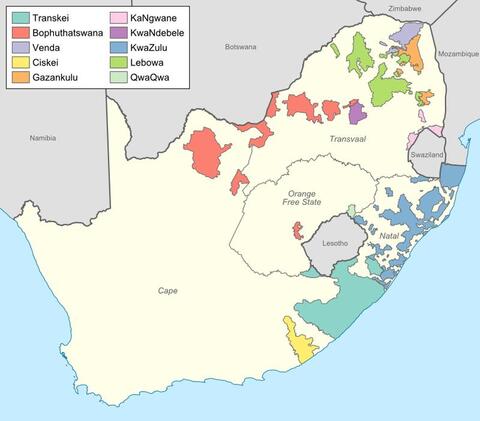
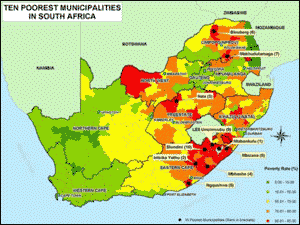
The Natives Land Act of 1913 restricted Black South African land ownership to just 7% of the country’s territory. Of course, that 7% comprised the least desirable tracts of land. The law established “reserves”, or Bantustans for Black South Africans, beyond which they were forbidden to rent or buy land. Even 30 years post-Apartheid, these are still the areas with the greatest concentrations of poverty in South Africa.
The Lingering Past
Eventually, South Africa achieved true independence when Nelson Mandela came to power. Years of collective resistance forced the whites in charge to recognize that their situation was untenable and they agreed to fair elections. Mandela was elected President in 1994 after being imprisoned for 3 decades of his life, and began working with the ANC to dismantle apartheid. However, he couldn’t do this all at once. You can’t just flip the switch on a nation’s entire economy overnight without triggering recessions, food shortages, and social unrest, threatening the stability of the new democracy. Instead, Mandela’s government focused on more gradual reforms, like the Reconstruction and Development Programme, which established free healthcare and equal hiring policies. But the land question was left largely unresolved.
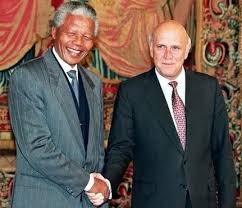
When Apartheid ended, whites owned 87% of the land. Mandela’s ANC party promised that within 5 years, 30% of the land would be redistributed. However, an audit from 2017 found that white South Africans still possessed 72% of the country’s agricultural land, while Black South Africans owned just 4%. For context, the 2022 census showed that white South Africans accounted for 7.3% of the population, while Black South Africans accounted for 81.4%.
A major reason for the slow progress is that most South African land reform was based on the “willing seller, willing buyer” principle, with many white farmers unwilling to part with their land. “This was the price of a peaceful transition: an agreement to transfer political power without broadly redistributing wealth.”
This ineffective principle has led to mounting frustration. Frustration not simply stemming from the historical injustices of forced removal and segregation, but from the material consequences of overcrowded cities straining municipal resources due to millions being unable to settle elsewhere. According to the World Inequality Lab, “There is no evidence that wealth inequality has decreased since the end of apartheid,” thanks to a failure to address historically inequitable economic structures.
Of course, colonialism and apartheid aren’t solely to blame for South Africa’s challenges. Corruption and mismanagement by the ANC have tarnished Mandela’s legacy and stifled economic growth. But the reality is that without meaningful structural change, economic stagnation will continue.
Enter the Expropriation Act
Which brings us to the law that pissed off Elon Musk and put South Africa in American headlines. In January, President Cyril Ramaphosa, signed the Expropriation Act detailing how the government can legally seize private property. Keep in mind that nearly every country, including the good ole U.S. of A. has some form of eminent domain law, allowing for the confiscation of private property. (If you’re interested in how this has been racially applied in our past, look into the history of the interstate highway system.) What’s controversial about the Expropriation Act is that it allows for expropriations without compensation.
You might reasonably think to yourself, “That’s theft!” But consider how the government can only seize property without compensation under very limited circumstances. Section 12(3) of the Expropriation Act states:
It may be just and equitable for nil compensation to be paid where land is expropriated in the public interest, having regard to all relevant circumstances, including but not limited to—
(a) where the land is not being used and the owner’s main purpose is not to develop the land or use it to generate income, but to benefit from appreciation of its market value;
(b) where an organ of state holds land that it is not using for its core functions and is not reasonably likely to require the land for its future activities in that regard, and the organ of state acquired the land for no consideration;
(c) notwithstanding registration of ownership in terms of the Deeds Registries Act, 1937 (Act No. 47 of 1937), where an owner has abandoned the land by failing to exercise control over it despite being reasonably capable of doing so;
(d) where the market value of the land is equivalent to, or less than, the present value of direct state investment or subsidy in the acquisition and beneficial capital improvement of the land.
As the legal analysis site Jurist explains, “In other words, land can be seized without compensation if the owner is not using it, and is rather just waiting for property values to rise in order to sell at a profit; if a government agency acquired the land for free and has no real use for it; if the land has been abandoned; or if government spending to sustain the land has surpassed its market value. Notably, these are examples and the list is not exhaustive. But in practice, the government has yet to seize any land without compensation.”
Of course, even in those limited cases, the land isn’t just seized overnight. “The act further requires that an expropriating authority – an organ of state or person empowered by the act or any other legislation – must first try to reach an agreement with the owner to acquire the property on reasonable terms before considering expropriation.” A South African legal expert noted that there are 17 steps in this process, giving landowners ample legal recourse to challenge a seizure. But when do Americans ever let nuance get in the way of outrage?
The Real Reason This Made Headlines
Why did this relatively benign piece of South African domestic policy make American headlines? Because our dear leader is a white South African whose fortune is based on apartheid seed capital. After running for office in Canada as a member of the fringe antisemitic Social Credit party, Elon Musk’s grandfather moved to South Africa in 1950 – just 2 years after the establishment of Apartheid – where he wrote extensively in defense of the white racist regime. The regime he defended allowed Elon’s father to become incredibly wealthy, filling Elon’s pockets with emeralds mined by black laborers. That regime afforded Elon an education which black South Africans were legally prohibited from, and through his father’s wealth, provided seed funding for Elon’s early (failed) business ventures. No wonder he’s so hostile to attempts to right the wrongs of Apartheid!
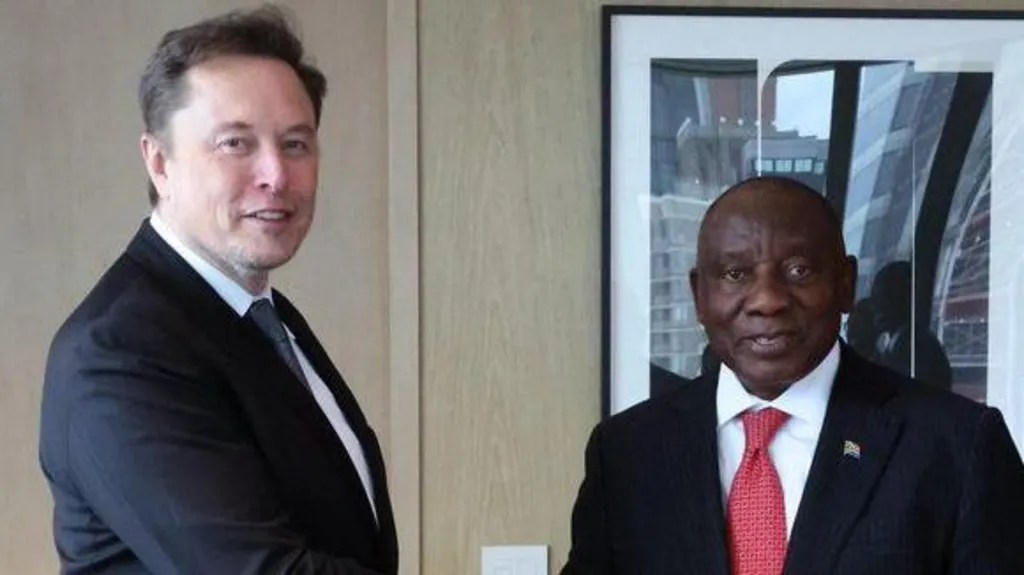
A few weeks after the signing of the Expropriation Act, Musk tweeted at Pres. Ramaphosa, “Why do you have openly racist ownership laws?” despite the fact that the law makes no mention of race. Trump, quick to please his sugar daddy, then signed an executive order cutting off U.S. aid to South Africa. (He also hates that South Africa brought a genocide case to the International Court of Justice against Trump’s other sponsor, Israel). His vengeful response will quite literally kill innocent people. U.S. aid makes up around 17% of the $2.5 billion budgeted annually to treat HIV/AIDS in a country where 8 million are infected with the deadly disease.
But Trump’s executive order wasn’t just about aid. It also directed the government to “promote the resettlement of Afrikaner refugees escaping government-sponsored race-based discrimination.” Again—this is based on a law that makes no mention of race. At first, it might seem odd that Trump, the face of America’s anti-immigrant movement, is suddenly championing African refugees. Until you realize he’s only offering to help white Afrikaners. Talk about race-based discrimination…
White Supremacy, Plain and Simple
America First, promoted by the “Christian” right, means people fleeing gang violence in Guatemala don’t deserve refugee status. It means people fleeing from terrorism in Syria don’t deserve refugee status. Even the family members of U.S. service members and Afghans who served alongside the U.S. military fighting the Taliban – people who were already approved to resettle – don’t deserve refugee status. But white Afrikaners? Send em over! The same crowd that screams about “replacement theory” when it comes to migrants of color is now bending over backward to welcome white South Africans.
This is not about land. This is about race.
And that’s why South Africa is back in the headlines.
Make a one-time donation
Make a monthly donation
Make a yearly donation
Choose an amount
Or enter a custom amount
Your contribution will help the Philthy Liberal grow! Any amount is greatly appreciated!
Your contribution is appreciated.
Your contribution is appreciated.
DonateDonate monthlyDonate yearly

 The Philthy Liberal
Leave a comment